




Ready or not here we come roaring into 2017! Some great and exciting things coming soon to Real Estate and to help serve my clients in a better, faster and more economic way. Stay tuned but in the meantime enjoy the monthly newsletter full of events, tips and tricks for this month. Stay warm and safe!


New home sales hit highest level in 9 years!
Millennials still believe in the homeownership dream even if they can’t afford to buy
Housing market across the U.S. finally starting to look healthy
Salary needed to buy a home in 19 major U.S. cities
Tips for staying out of debt
Calculate how much house you can afford
King County’s eco-remodeling tool provide tips for going green for your next home renovation
Four colors that may hurt a home’s sales price
7 percent of Puget Sound homes are underwater, compared with 12 percent nationally
A teardown a day: Bulldozing the way for bigger homes in Seattle, suburbs
BLS stats show Seattle-Tacoma-Bellevue is #7 Metro area for fastest job growth
What does Vancouver’s housing market implosion mean for Seattle?

Seattle home-sale market provides small hint of slowdown
You need an annual salary of $83K to afford a home in Seattle
Everett welcomes the film industry, an important economic driver for local businesses
I hope your week is a great one!
Jen Murrweiss | Remax Elite | 425-422-7243


 REFERRAL RECOMMENDATIONS FOR CLIENTS
An inspector I use, and highly regard, composed this list on tradesman he has used and trusts. If you click on the below link it will bring you a “tool box” in alphabetical order of almost every type of service, you could need in the Puget Sound area. Click here
Below are some that I (with the *) have used, recommendations from other agents and our area neighborhood recommendations.
General Contractors Handy Man
Gutters
Plumbing/Heating
Landscaping
Carpet Cleaning
Crawl Space
Carpentry work
Kitchen/bathroom cabinets
House Cleaning Service
Pest Control
Electrician
Garage Doors
Security Systems
Septic
ORGANIZATION
ROOFING
TREE TRIMMER
Windows and glass replacement and insulation
Have someone you would recommend to a friend? Let me know I am always looking for great people to recommend. As I love to recommend great people and services please remember me for your Real Estate needs or those of your friends and family.
I am never too busy for your referrals!
Jenifer Murrweiss REMAX Elite Realtor Consultant 425-422-7243
snohomishcountyhomes@hotmail.com

With Tax Season coming to a close and all that paper everywhere do you feel like just throwing it all up, away or into the fire? Boy I know I do but, we have to keep some important docs and I hope this list is a good reminder.
Tax returns- 7 Years– Keep tax returns and all supporting tax docs, including W-2’s, 1099 forms, property tax info, bank statements, mortgage interest statements, cancelled checks, receipts, home purchase and home improvement info.
Paycheck stubs– 1 Year
 Home Ownership
Insurances
Investment/Retirement Accounts
 Permanently Never Shred
We’ve all had that moment — driving down a street and we see a home we like specifically for the architecture and design elements. The United States is full of different home styles and architecture, and pinpointing a specific one can be difficult, especially when dominant home styles change from region to region. The homes below are examples of the most prevalent home styles found throughout the United States.
Which is your favorite and why?
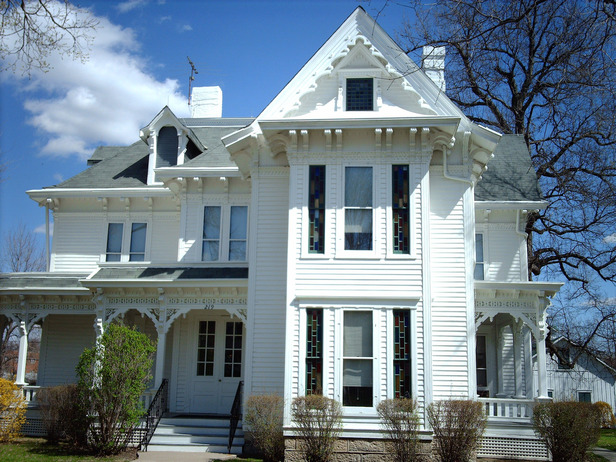
VICTORIAN
Victorian homes give off a certain air and possess a very stately feel. Victorians are more about beauty than functionality, with complex designs, ornate trim, and large wraparound porches. The Victorian exterior is seen as a medium for decoration. These homes generally have gables, bay windows, towers, overhangs and many are known as ‘Painted Ladies.’ The Victorian style also has sub styles, the most notable being Gothic Revival, Italianate, Second Empire, Queen Anne and the Romanesque style.
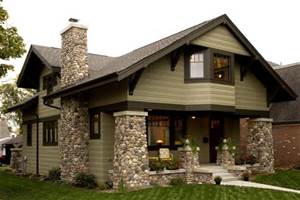
Craftsman Bungalow
The Craftsman or Bungalow style is seen as an expression of structure and elements that rely heavily on simple, elegant design. The Craftsman is one of the most common and popular styles in the United States, with an incredible resurgence in the last five years. These homes are characterized by their wide front porches, low-pitched roofs and exteriors that use wood, stone and/or brick. The interior of the Craftsman also has an open floor plan with many built-ins throughout the house.

Tudor
Tudors are very distinct and based on English building traditions during the Tudor Era (1485 – 1603). Tudors are characterized by their asymmetrical exteriors with windows playing a large part in the design. These homes generally have stone and stucco walls with wood accents/framing, and Tudor roofs are steep-pitched. Tudor homes are one of the most recognizable styles in the United States due to their specific architectural components.
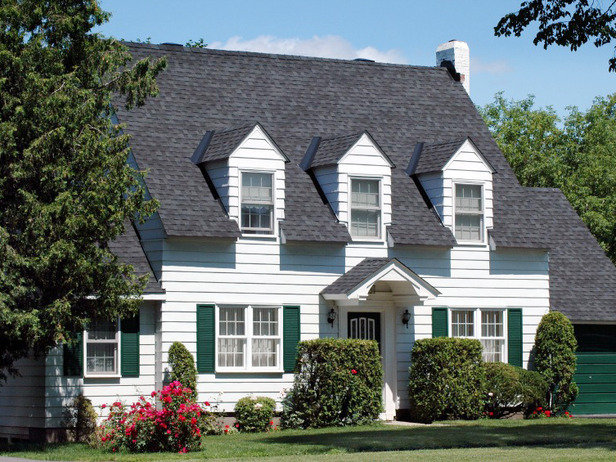
Cape Cod
Cape Cods were first built in the 1600s and took inspiration from Britain’s thatched cottages. Cape Cods have steep roofs, dormer windows and large chimneys — elements that helped the homes withstand harsh Northeastern winters. The Cape Cod style is most recognized for its dormer windows, which play a large part in the design of the home.
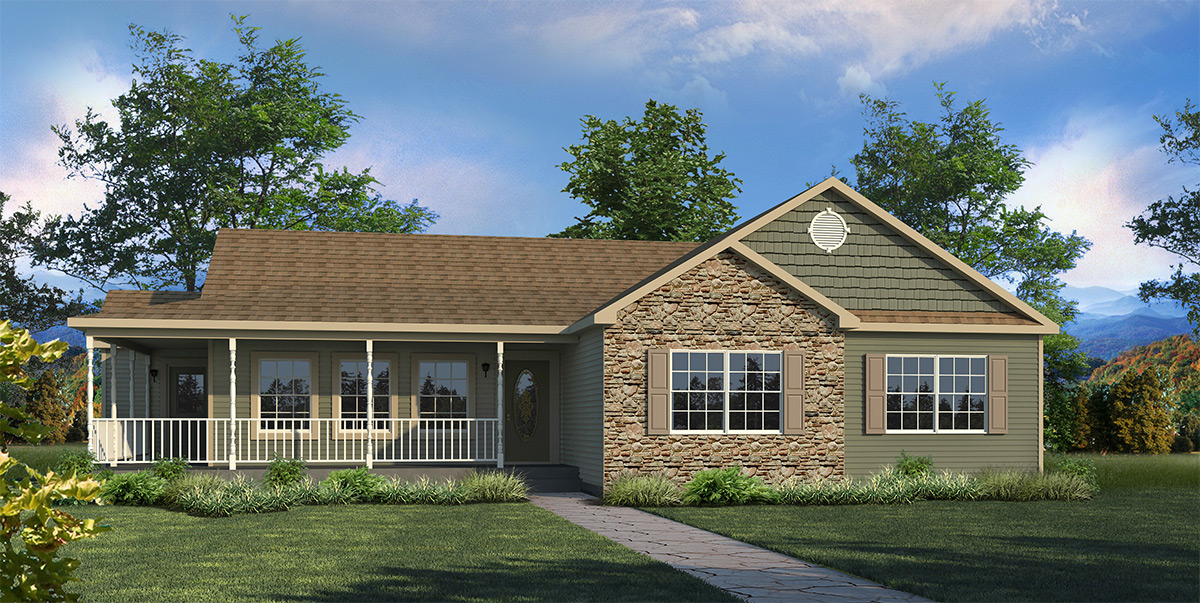
Ranch
Ranches are also known as ‘Ramblers.’ Ranches are characterized by their single-story construction and low pitched roofs. Ranches became very popular in the post World War II era, with a large resurgence in the 1960s as ‘mid-century moderns.’
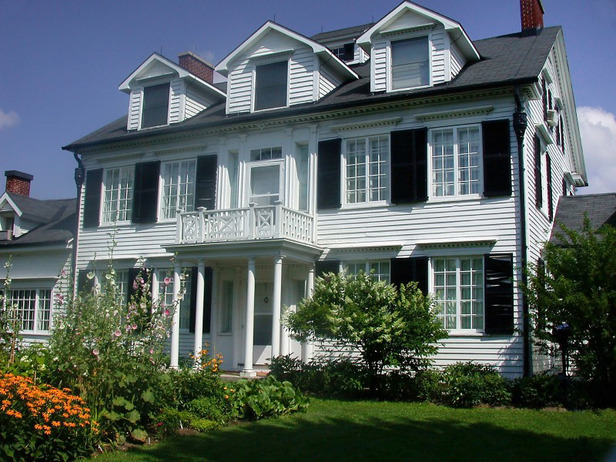
Colonial
Colonials are another home style that have a distinct appearance. Symmetry plays a large part in Colonials — evenly spaced shuttered windows, dormers, columns, and old Colonials will have many fireplaces. The most common Colonial in the United States is the Georgian Colonial, characterized by its strict symmetry, box shape, paneled front door below a decorative crown, simple or flattened columns, and the most notable feature of five shuttered windows across. Other notable Colonial styles in the United States are Dutch, Federal, and Spanish.

Contemporary
Contemporary homes have an almost futuristic look to them, but many contemporary homes look to connect the indoors with the outdoors. Natural light plays a large part in the contemporary home, as do flat roofs and simple horizontal and perpendicular lines. Contemporary homes embrace industrialism and put an emphasis on the use of efficient and affordable materials, and the homes emphasize an importance of combining materials (steel, glass, wood, stone, etc.) to create a fluid space.

Spanish
Spanish style homes incorporate a fusion of design elements from European and Native American architecture. The Mission Revival style is the most popular, which has its roots in Spanish churches built by missionaries. Spanish style homes tend to have clay roof tiles, arcaded porches, arched corridors, bell towers, square pillars and quatrefoil windows (these windows resemble flowers).
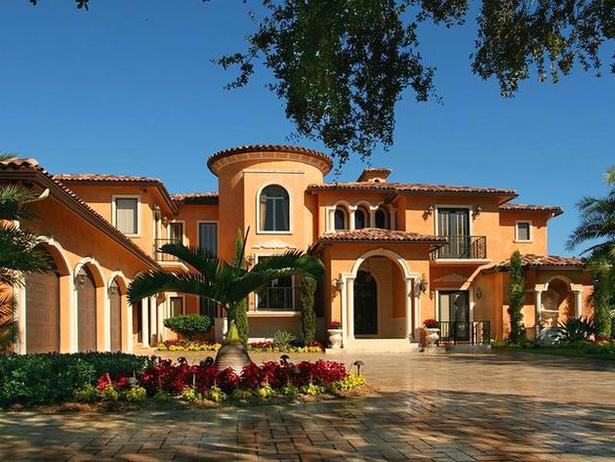
Mediterranean
The Mediterranean style became very popular in the United States in 1918 to 1940. This style is modeled after the hacienda style, where red tile roofs, arches, and plaster surfaces play a large part in the exterior of the house. Mediterranean style homes have become popular again, but the style has adopted more design elements like porticoes, balconies, and ornamental details that include heavy wood doors, tiles in multiple colors or designs, and balconies with ornate iron railings and embellishments.
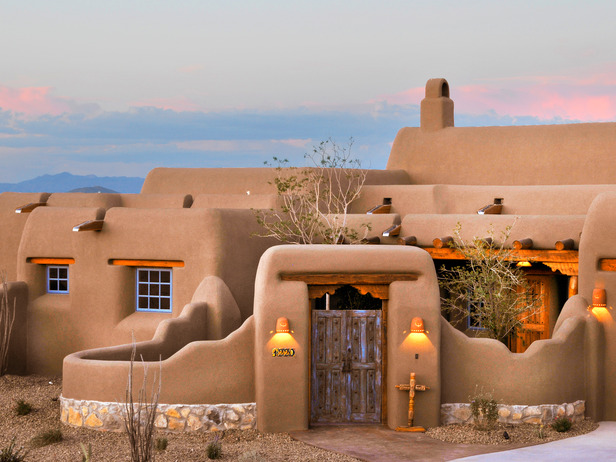
Pueblo Revival
The Pueblo Revival is a style favored in the Southwest, highly influenced by the ancient Pueblo’s simple multifamily homes. This home style favors materials sourced from the earth — adobe, concrete, stucco or mortar, and wood beams — and the homes tend to feature enclosed courtyards and flat or sloping roofs. The Pueblo style is also characterized by rounded exteriors that exhibit square windows, weathered wood doors and exterior stone accents.
Homes can take any shape or size, and many homes built today embrace two or more styles. The United States has many other home styles not featured. If you’re looking for a home in a particular style, your agent will be able to help find that perfect property.
If you’re interested in learning more about home styles, you can find more information here: This Old House, Popular House Styles, DIY Network

Stone Cold Sober Uses for Beer & Booze Around the House – An infographic by the team at BobVila.com

TAX TIP: The 121 Exemption When Selling Your Home
The reason to do a 1031 exchange is to avoid capital gains taxes on investment property. Almost once a week I get asked about the sale of a primary residence. When you sell your home, you have an exemption from most capital gains taxes. A great resource to get more details about that is an IRS Publication, updated annually, called Selling Your Home (Pub 245). You could go to IRS.gov to download that.
In short, there is a 121 Exemption for capital gains taxes up to $250K per individual or $500K per married couple filing jointly. You do have to have lived in the property as your primary residence for 2 out of the last 5 years, and you can only take this exemption, once every 2 years.
This has been used in a long term strategy to avoid paying capital gains on rentals by converting the property from investment to primary residence. The IRS got wise to this strategy and put some constraints on this.
It could still be part of a plan, but reach out to your tax advisor with questions and see if this is an option for you
 Jen Murrweiss RE/MAX Elite